
During those sleepless nights, a pacifier can be a parent’s best friend. Are they beneficial or do they damage your child’s teeth in the long run, leaving you facing sky-high orthodontist bills?
Our guide will look at how to balance the support offered by pacifiers with the healthy development of your child’s bite and teeth. We will look at the different pacifier designs, as well as when you should stop using them.
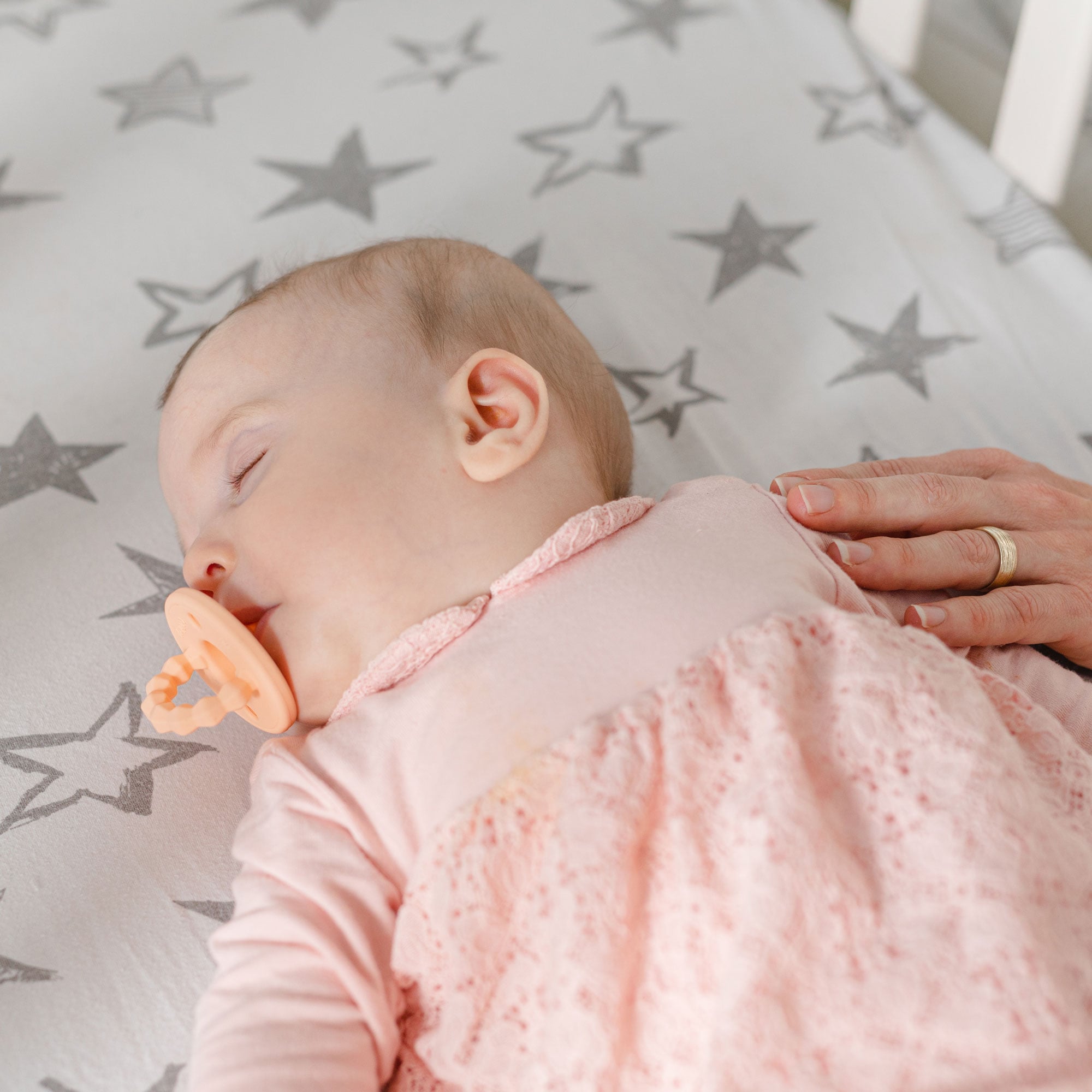
Understanding the Pacifier-Bite Connection During Teething
Most of us have heard horror stories and urban legends about how using a pacifier can ruin your child’s teeth forever. But what is the truth, and what does science say?
How Pacifiers Influence Oral Development
Using a pacifier during teething can offer your child relief and comfort. However, it can also impact their growing mouth, particularly while they are developing and teething. The added sucking pressure applies 2-4 pounds of force on developing oral structures. The tongue position is slightly altered, which can affect the formation of the palate. The act of using a pacifier also affects jaw alignment as it encourages the jaw to move forward.
This can be a catch, as children often want the additional comfort of a pacifier while they are teething. The more sore their gums, the harder they usually suck and for longer amounts of time. This increased use can cause a bigger impact on their developing teeth and mouths.
Critical Windows: When Pacifiers Matter Most
Although using a pacifier can impact the development of your child’s mouth, this depends on how old they are when they give it up. You can generally expect the following developmental guidelines (although not all children develop at the same rate):
- 0-6 months: Minimal impact as the sucking reflex is natural.
- 6-12 months: First teeth are emerging and the palate is forming.
- 12-24 months: Multiple teeth start emerging, and increased jaw growth.
- 24-36 months: Bite is established, and habits are entrenched
- 36+ months: The risk of permanent damage increases.
Pacifiers vs. Other Teething Soothers
Although pacifiers are the most common devices to soothe teething, there are other soothers available.
- Thumb sucking: This can be harder to control, especially in the long run.
- Teething rings: These have less impact on the bite and are often used for shorter amounts of time.
- Bottles: They offer a different pressure pattern, but can increase the risk of tooth decay.
- Blankets/toys: These offer comfort without any impact on oral development.
There are several reasons parents choose pacifiers. The most obvious is that they offer immediate relief from teething pain and can help reduce sleep disruption. They are also easy to carry around and replace. Pacifiers also offer a reduced risk of SIDS when used by children below 1 year.

Types of Bite Problems from Pacifier Use
Extended use of pacifiers can lead to various developmental problems with the teeth and jaw.
Anterior Open Bite: The Most Common Issue
The most common thing to be affected is the top teeth. Using a pacifier can cause these to develop in a way that means they don’t touch the lower teeth when the mouth is closed. This occurs in 25-40% of long-term users, and the severity increases the longer a pacifier is used regularly. The good news is that this can be easily reversed if pacifiers are removed from 2-3 years old.
Posterior Crossbite: The Hidden Problem
This is less visible but can still cause problems later. It is when the top jaw is narrowed, and the upper teeth sit inside the lower teeth instead of over them. 13-20% of prolonged users are affected, and it normally requires orthodontic intervention to be corrected.
Overjet and Other Issues
As well as the two common impacts, there are other ways using a pacifier can affect oral development. Continued use can cause the upper teeth to protrude forward or cause issues with overcrowding or unwanted gaps. The biggest factor in long-term damage is the amount of time a pacifier is used, as well as its design.
Smart Pacifier Choices for Teething Babies
One of the best ways to enjoy the benefits of pacifiers while limiting their risks is by choosing an orthodontic pacifier.
Orthodontic vs. Conventional Designs
Orthodontic pacifiers are designed to cause minimal disruption to your child’s mouth. They replicate the shape of a nipple, which mimics the natural act of breastfeeding. They also have a wider shield, which encourages proper spacing. Dr. Talbot's Orthodontic Pacifiers use a dental-friendly shape to limit oral impact. If your baby prefers softer materials, we recommend Dr. Talbot's Soft Flex Orthodontic Pacifiers. For added soothing support, use with Dr. Talbot's Soothing Gel
Best Material and Size
Choosing the best material and size for your baby can also make a big difference. Pacifiers made using medical-grade silicone are safe while still offering more durability.
Using the correct size is also important. Young babies (0-6 months) should have the smallest nipple size, but this can be increased when they reach 6 months. There are larger sizes available for children over 1 year, but this is generally a good time to consider weaning.
Using Pacifiers Strategically During Teething
There are also some things you can do to limit the long-term impact of pacifiers. One way is to only allow your baby to use one when they are in pain, removing it as soon as they fall asleep. You should also make sure you clean it between uses, as this helps prevent infection and further pain, which may in turn require a pacifier.
Evidence-Based Guidelines for Safe Use
Professional Recommendations by Age
One of the best ways to use pacifiers safely and with minimal long-term effects is to understand the specific age recommendations. The American Academy of Pediatrics (AAP) and American Academy of Pediatric Dentistry (AAPD) suggest the following guidelines when it comes to using a pacifier:
| Age | Recommendation |
| Birth- 6 months | Pacifiers are recommended to reduce the risk of SIDS |
| 6-12 months | Start to limit use during the daytime |
| 12-24 months | Focus on weaning, particularly during the day |
| 24+ months | Continue weaning and aim to cut out completely |
Weaning Strategies That Work
One of the most challenging parts of using a pacifier is weaning them. While it can seem overwhelming, following a structured plan can make the difference.
- Week 1-2: Begin by cutting out the pacifier just in the mornings.
- Week 3-4: Cut out afternoon pacifier usage.
- Week 5-6: Only give a pacifier at bedtime. If your child is resistant, consider offering another form of comfort, such as Dr. Talbot's Chamomile Night-Time Soothing Tablets.
- Week 7-8: Stop using a pacifier completely.
One of the most difficult times to wean is when your child is teething. This is because they may have grown used to apacifier for providing comfort from teething pain. This is why it is a good idea to try to wean when your child isn’t teething. You should also have alternative sources of comfort ready for teething, like Dr. Talbot's Infant Pain + Fever Relief.
Monitoring for Problems
While following the timeline above, you should also pay close attention to your child. This is because sometimes the damage starts to happen sooner, requiring earlier weaning. These signs include the teeth not meeting properly, the jaw moving when the mouth is closed, or speech development delays.
Medical professionals can help guide you, which is why regular checkups are important. You should aim to take your child to their dental appointment at 12 months old or within 6 months of the first tooth’s appearance. Their bite development can then be checked at 18 months, with intervention starting at 24 months if needed.
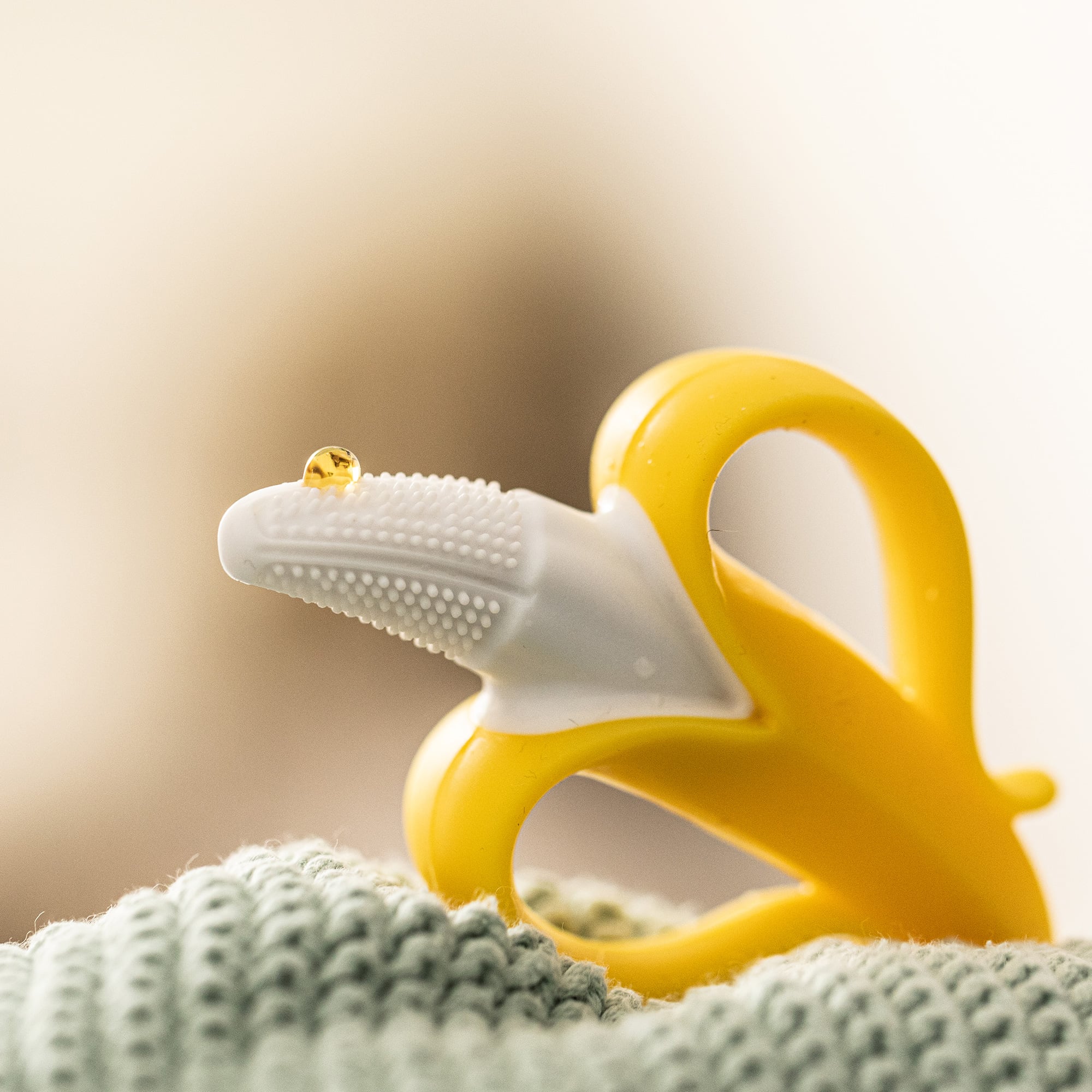
Alternatives to Pacifiers for Teething Relief
Even if pacifier weaning is going well, lots of parents find themselves turning to them when their child is teething. Having some effective alternatives to offer comfort and soothe pain can help you navigate these difficult times.
Non-Sucking Comfort Options
There are other ways you can comfort a teething child that aren't a pacifier or sucking. One is by gently applying a teething gel to the gums, like Dr. Talbot's Nighttime Baby Tooth Gel. Another thing you can do is gently massage the gums with a toothbrush. Dr. Talbot's Baby Toothbrush Training Set is designed to be gentle on young gums. For 24-hour management, Dr. Talbot's Baby Tooth Gel Combo Pack offers both a nighttime and daytime teething gel.
Long-Term Outlook and Professional Care
Luckily, if you wean your child off a pacifier at the right time, the chances of recovery are high. Often, there is no need to seek professional care further down the line.
Recovery Potential After Pacifier Weaning
When it comes to long-term damage, the chances of recovery are higher the earlier you wean. If you take a pacifier away at 6 months, most minor issues usually resolve themselves. If it is by 12 months, most moderate problems will correct themselves. Natural correction is still possible up until 24 months, after which you may need to seek professional advice.
When to Seek Professional Help
Sometimes, despite your best efforts, you may need to seek professional help. This is recommended if you see your child has visible bite problems or delayed speech. You should also seek help if you are having particular difficulty weaning, especially after the age of 3.
Pacifiers can be an excellent source of comfort for young children and can help to reduce the risk of SIDS. However, they also come with their own risks as they can negatively impact long-term oral development. This can scare many parents. However, following the guidelines means you can successfully use a pacifier without any long-term damage.
At Dr. Talbot’s, we are here to support you throughout your parenting journey. Our Oral Care Collection has everything you need to keep your child’s mouth healthy. The Baby Care Collection has you covered for the rest of the time.
5 Essential FAQs
Can pacifiers actually help with teething pain, or do they make it worse?
Pacifiers can offer comfort for teething pain. The act of sucking releases endorphins, which helps distract your baby’s attention away from the pain. However, if they use it too much while teething, it can increase oral development risks. The best way to reduce this risk is to use orthodontic pacifiers.
What's the difference between orthodontic and regular pacifiers for bite development?
Orthodontic pacifiers are designed with a flattened bottom and curved shapes. This means they suit the natural position of the tongue and help reduce pressure on developing teeth.
At what age does pacifier use start affecting my baby's bite?
The risks of using a pacifier increase the longer it is used. Within 12 months, the impact is minimal. This risk increases after 12 months, with 2-3 years being critical. At this age, there is a 70% risk of impact on oral development. This is why it is a good idea to wean between 12 and 24 months.
My teething baby is dependent on their pacifier for sleep - how do I balance dental health with rest?
The best way to approach this is gradually. You can consider offering a pacifier to get your child to sleep, then remove it once they are asleep. Using Dr. Talbot's Nighttime Baby Tooth Gel before bed can also help reduce discomfort. If you find yourself using a pacifier more during teething, don’t panic. This is temporary and will have fewer long-term risks than using it every day.
Can bite problems from pacifiers correct themselves, or will my child need braces?
This depends on how long your child uses a pacifier. If they wean by 12 months, any bite problems will most likely correct themselves. This continues up to the age of 2. The chances of recovery if they stop by 2 years old is 80%, while this drops to 30% after the age of 3.
