
You've made it to the final stretch of pregnancy, and now there's just one more to-do standing between you and meeting your baby: packing your hospital bag.
When should I pack my hospital bag?
What actually needs to be in a hospital bag for labor and delivery?
Is a hospital bag checklist different for a C-section?

These are the questions we hear most from moms-to-be, and we're here to help you answer them. In this guide, you'll find a complete, doctor-informed hospital bag checklist for mom and baby, organized by who and what it's for, so you can pack with confidence and leave the guesswork at home.
When should I pack my hospital bag?
Most OBs and midwives recommend having your hospital bag packed and ready by 36 weeks pregnant, since babies don't always wait for your due date. If you're having twins, carrying multiples, or have a higher-risk pregnancy, your provider may suggest packing closer to 32 weeks. Keep your bag by the front door or in your car so it's ready to grab the moment labor starts.
What should I bring in my hospital bag?
No matter what kind of birth you're planning, whether it's an unmedicated vaginal delivery, an induction, or a scheduled C-section, there are some hospital bag essentials every mom will need. It's easy to focus entirely on the baby's bag and forget that you'll need just as much support for your own recovery.
Breastfeeding & Pumping Supplies
If you're planning to breastfeed, pack for it before you go into labor. Bring Nursing Pads for leaks in those first engorgement-heavy days, and Vegan Nipple Balm, a lanolin-free option made with calendula, jojoba oil, and shea butter, to soothe soreness from those very first latches.

For Baby
Hospitals typically provide diapers, wipes, and a few onesies to get you through baby's first day or two, but you'll want more than the basics packed and ready. Bring a going-home outfit in two sizes, since newborn sizing runs unpredictably small or large, plus a few extra onesies or swaddle sleepers for spit-up and blowouts. Pack a swaddle blanket, a weather-appropriate hat, scratch mittens to protect those fast-growing newborn nails, and a few burp cloths.
If you plan to use a pacifier, bring one from home rather than relying on the hospital's.
Last but most important: a car seat that's already installed and inspected. Hospitals will not discharge baby without a properly installed car seat, so this is one item to double-check well before your due date.
Comfort, Paperwork & Personal Items
Bring your insurance card, photo ID, hospital pre-registration paperwork, birth plan (if you have one), and your pediatrician's contact information.
It's also worth packing the small personal-care items that are easy to overlook until you actually need them: hand sanitizer, a travel pack of tissues, chapstick or lip balm (hospital air is notoriously drying), hair ties, and a phone charger with a long cord. Some moms also like to pack a birthing comb, a plain hair comb held teeth-side against the palm and squeezed during contractions. It's a low-cost technique doulas and L&D nurses have used for decades, based on the gate control theory of pain, which holds that the brain can only fully focus on one strong sensation at a time.
Caring for mom doesn't stop at birth-specific supplies, and caring for your partner or support person matters just as much. Pack a change of clothes for them too. Comfortable clothes, snacks, their own phone charger, and the same small comfort items (tissues, chapstick, hand sanitizer) will make a long labor easier on everyone in the room, not just the person giving birth.
Hospital Bag Checklist for Mom & Baby
To make packing easier, we've organized everything above into one printable checklist, broken down by category and priority.
Most Important
Postpartum Recovery
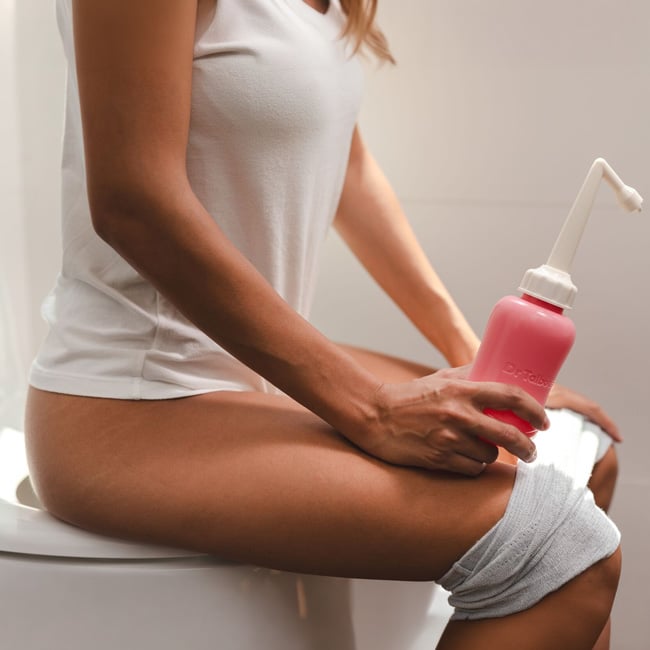
Postpartum Peri-Bottle
Postpartum Ice Pads
Cooling Perineal Pad Liners
Perineal Soothing Foam
Disposable Postpartum Panties
Maternity/disposable underwear (extra pairs)
Paperwork
Insurance card & photo ID
Hospital pre-registration forms
Birth plan (if applicable)
Pediatrician contact information
Baby
Properly installed, inspected car seat
Going-home outfit (2 sizes)
Swaddle blanket
Very Important
Breastfeeding & Pumping
Nursing pads
Vegan Nipple Balm
Comfort for Labor
Robe or nightgown
Cozy socks
Phone charger (long cord)
Lip balm
Your own pillow
Kleenex/tissues
Cleansing face wipes
Recovery Support
Stretch Mark & C-Section Scar Strips (if applicable)
Important
Snacks for you and your support person
Toiletries & travel-size toothbrush
Going-home outfit for mom
Nursing-friendly pajamas
Flip-flops for the shower
Extras
Playlist or speaker
Camera
Extra phone charger for partner
Pillow and/or blanket from home
Own snacks (hospital food isn't always available on demand)
For Your Support Person
Change of clothes
Toiletries
Snacks & drinks
Phone charger
Entertainment for waiting periods

What should I pack differently for a C-section?
If you know you're having a scheduled C-section, or want to be prepared in case of one, a few additions are worth packing: high-waisted, soft postpartum underwear that won't rub against your incision, and looser, high-waisted bottoms for the ride home. Recovery from a C-section is a longer road than a vaginal delivery, so packing extra patience (and extra pads) goes a long way.
Do I need a separate hospital bag for postpartum recovery at home?
Not necessarily, but it helps to think one step past the hospital stay. Many of the same items you pack for the hospital, like peri-bottles, ice pads, and nursing pads, are ones you'll keep using for two to six weeks after you're home. Consider packing a few extras of the Postpartum Recovery Kit essentials so you're not making a pharmacy run in your first week home with a newborn.
Beyond the hospital bag, there are a few extra items many moms find useful once they’ve settled in back at home.
A Lactation Massager uses heat and vibration to help increase milk flow and prevent clogged ducts from day one, and Hot & Cold Breast Therapy Pads offer flexible relief for engorgement or let-down discomfort. If you'd rather have one all-in-one set instead of building your own, The Ultimate Breastfeeding Care Package includes storage bags, a lactation massager, a silicone breast pump, nursing pads, nipple balm, a therapy pad, and a tote.

Planning to pump once you're home? A hands-free Silicone Breast Pump is easy to use with one hand and requires no batteries or cords, while MilkFresh Breastmilk Storage Bags and MilkFresh Sensors let you track exactly how fresh your pumped milk is, so nothing gets wasted or served past its window. The MilkFresh Pumping Bundle pairs the bags and sensors together for one streamlined pumping kit.
A Postnatal Multi-Vitamin supports your recovery with folic acid, zinc, and DHA, and Lactation Support capsules, formulated with fenugreek and blessed thistle, can help support milk production if supply is a concern.Your body is doing a lot of work postpartum, whether you're recovering from delivery, producing milk, or both.
Tips for Packing Your Hospital Bag
Pack early, but keep a "day of" bag separate. Have your main bag ready by 36 weeks, then keep a small tote by the door with your phone charger, ID, and insurance card so you're not searching for essentials mid-contraction.
Bring more postpartum supplies than you think you'll need. Between lochia, engorgement, and general soreness, most new moms go through more pads, liners, and nursing pads than expected in the first 48 hours.
Don't forget yourself in baby's bag. It's easy to over-pack for baby and under-pack for your own recovery. Your body just did the hardest work of its life. Treat your comfort and healing as a packing priority, not an afterthought.
Ask your hospital what they provide. Many hospitals supply basic diapers, wipes, mesh underwear, and pads, so you may not need to overpack duplicates, but always bring your own preferred postpartum recovery products for comfort you can count on.
You've got this.
Packing your hospital bag is one of the last things on your to-do list before meeting your baby, and it doesn't have to be complicated. Focus on the essentials, lean on this checklist, and give yourself grace if you forget something. Hospitals are used to supporting new parents, and so are we.
Shop Dr. Talbot's Mom Care Collection for everything you need to prepare for labor, delivery, and postpartum recovery.
This article is for informational purposes only and is not a substitute for medical advice. Always consult your OB-GYN, midwife, or healthcare provider about what's right for your pregnancy and delivery.